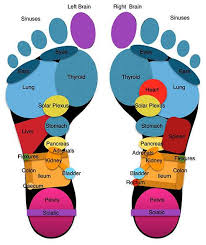
What is Reflexology?
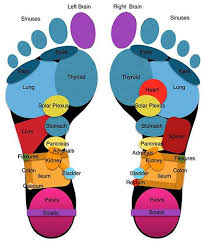
Reflexology is based on the principle that reflex points on the feet and hands provide a map to the entire body, promoting natural healing. Gentle pressure is applied to the reflexes using a range of techniques including massage, but this is so much more than a foot or hand massage. Reflex points on the feet and hands correspond to the systems and organs of the body so it offers a whole body experience despite touch only being applied to the feet or hands. The foot maps Reflexologists study and use today are based upon those developed by Eunice Ingham 'The mother of modern Reflexology' in the 1930s.
Relaxation
Encourages deep relaxation and helps calm the nervous system.


Supports better sleep by reducing stress and tension.
Promotes balance and overall wellbeing.
Wellbeing


Restful Sleep


Allowing yourself to unwind and reach a deeper level of relaxation is essential to encourage your body to naturally support and heal itself. Reflexology can facilitate this by shifting your body out of the 'fight or flight' (sympathetic) state and into the 'rest and digest' (parasympathetic) mode. It is here that your body feels safe enough to heal, restore and reset. This is why Reflexology can support a wide range of conditions and symptoms - it allows your body to do what it is designed to do - heal.
How Can Reflexology Help?
At Lighter Steps Reflexology, treatments are designed to help calm busy minds and to enable tired bodies to slow down, reset and feel lighter.
The effect of Reflexology in patients with Fibromyalgia
https://www.signavitae.com/articles/10.22514/sv.2021.175
Raptopoulou, Sofia; Kouri, Maria; Vadalouka, Athina; Tsaroucha, Athanasia
Signa Vitae 2021
Aim: This study is to investigate the effect of Reflexology as an add-on treatment in patients with Fibromyalgia, receiving pregabalin as treatment. Method: The study was conducted from September 2017 to February 2020. 79 patients (74 women and 5 men) with a mean age of 54.6 years were included. Inclusion criteria: – Diagnosis of Fibromyalgia >1 year – Duration of pain >1 year – Pain intensity >6 on VAS scale – Not using Reflexology in the pastResults: – Primary endpoint: Reduction of pain scores more than 30% in 3 months. – Secondary endpoints: Functionality (in terms of rigidity and workability) in 3 months.In all patients, the diagnosis of Fibromyalgia was made by completing the FIRST (Fibromyalgia Rapid Screening Tool) questionnaire (Greek version). The evaluation of the results was done with the pain intensity questionnaire in scale VAS as well as with observation, interviews, diaries.All patients received Pregabalin medication at a recommended dose of 75–600 mg daily.44 patients (56%) received normal medication. A mean reduction in pain of >50% was recorded.35 patients (44%) did not reach the maximum dose due to side effects and the drug was stopped at 450 mg daily. These patients received 14, 20-min Reflexology sessions, in 12 weeks, in order to achieve the desired analgesic effect.There was a reduction of pain >65% and a significant improvement in the secondary endpoints of functionality (significantly reduced morning stiffness, increased ability to work).
Conclusions: Reflexology may be beneficial as add-on treatment in patients with Fibromyalgia who are unable to receive the recommended dosages of their medication.
Effects of Reflexology on Pain, Fatigue, and Quality of Life in Multiple Sclerosis Patients: A Clinical Study
Dilek Doğan Hatice; Tan Mehtap
Altern Ther Health Med 2021 AT6133
Context: Multiple Sclerosis (MS), occupies the first row among the s which leads to loss of neurological ability without depending on a trauma in the s. Reflexology is one of complementary therapies based on activating a body’s power to recover itself by special hand techniques applied to feet and hands. Positive changes in spasticity, pain, fatigue, depression, cortisol levels, anxiety, and blood pressure levels have been observed in MS patients after reflexology. Objectives: This study was conducted to determine the effect of reflexology on pain, fatigue and quality of life in MS patients. Design: The study was conducted experimentally by taking pretest and repeated measurements on reflexology and control groups determined by simple randomization. Setting: The study took place in the neurology clinics at two university hospitals in Turkey. Participants: Potential participants were 685 patients at the clinics who had been diagnosed with MS 6 months at least prior to the study. Of that group, 66 patients were included in the study, 33 in the intervention group and 33 in the control group. Intervention: Reflexology was applied on each patient in the intervention group for 3 sessions a week for 12 weeks, and weekly pain and fatigue and monthly quality of life were evaluated. No intervention was made to the control group. Both groups received routine treatment. Outcome Measures: Measurements occurred at baseline, weekly and monthly throughout the trial, and postintervention. Pain and fatigue were evaluated weekly using a Visual Analogue Scale (VAS) and the Fatigue Severity Scale (FSS), respectively and quality of life was evaluated monthly using the Multiple Sclerosis Quality of Life-54 (MSQOL-54) scale. Results: In the intervention group, significant decreases were observed in the pain scores from the seventh week and in the fatigue scores from the fifth week (P < .001). In the assessment of quality of life, the combined physical health and combined mental health scores were found to be higher in the intervention group than in the control group (P < .001).
Conclusion: The study indicates that reflexology can be used as a complementary and alternative therapy to reduce pain and fatigue and enhance quality of life in MS patients.
Effect of self-foot reflexology massage on depression, stress responses and immune functions of middle aged women
https://pubmed.ncbi.nlm.nih.gov/16520577/
Lee, Yun-Mi
Taehan Kanho Hakhoe Chi 2006 1 36 179-188
PURPOSE: This study was aimed to identify the effects of a self-foot reflexology massage on depression, stress responses and functions of the immune system of middle-aged women. METHOD: This study was a one group pretest-posttest experimental design and the data was collected from August 1st, 2004 to May 31st, 2005. The subjects consisted of 46 middle-aged women (40 – 64 years) who were recruited from the Community Health Center in Busan city. Subjects were not treated for 4 weeks, subsequently they were trained in self foot reflexology massage for 2 weeks, and then they did their own daily for 6 weeks (2 days at the research center, 5 days at home). The outcome variables were measured 4 times, at baseline, pre training, after training, and after the intervention. The collected data was analyzed using repeated measure ANOVA by the SPSS/WIN program. RESULT: There was a statistically significant difference in depression, perceived stress, systolic blood pressure, natural-killer cells and Ig G. However, there was not a statistically significant difference in diastolic blood pressure, pulse or serum cortisol.
CONCLUSION: These results suggest that a self-foot reflexology massage could be utilized as an effective nursing intervention to reduce depression and stress responses, and to strengthen immune systems in middle-aged women.
The Effect of Foot Reflexology on Postpartum Comfort and Breastfeeding Outcomes in Postpartum Women: A Meta-Analysis Study
https://pubmed.ncbi.nlm.nih.gov/40206022/#
Menekse, Dilek; Demirhan Kayacik, Ahsen; Ilcioglu, Kevser
Breastfeeding Medicine: The Official Journal of the Academy of Breastfeeding Medicine 2025 2 24
Introduction: In recent years, foot reflexology has been frequently used as a method to solve problems such as stress, pain, and depression. It has been observed that the studies focused on the effect of foot reflexology on the pregnancy and birth process. Research Aim: A meta-analysis of experimental trials evaluating the effectiveness of foot reflexology applied in the postpartum period on comfort and breastfeeding outcomes was conducted in the present study. Materials and Methods: A comprehensive electronic search was done through the PubMed, WoS, Wiley, ScienceDirect, Scopus, and Google Scholar databases to identify experimental articles. There was no time restriction when searching the database. The risk of bias was assessed using the Joanna Briggs Institute (JBI) critical appraisal checklist for quasi-experimental studies and the Cochrane risk of bias tool for randomized trials. The meta-analysis was conducted using Comprehensive Meta-Analysis. Cochrans Q test and Higgins I2 were used to assess study heterogeneity. Results: Three studies, two randomized controlled trials and one quasi-experimental trial (n = 260), were included in the analysis. Foot reflexology applied to postpartum women was found to have positive effects on the LATCH (standardized mean difference [SMD]: 1.010, confidence interval [CI]: 0.752/1.269, Z = 7.664, p = 0.000), Visual Analogue Scale (VAS)-breast tension (SMD: 2.212, CI: 1.902/2.522, Z = 13.981, p = 0.000), VAS-breast heat (SMD: 2.240, CI: 1.928/2.552, Z = 14.086, p = 0.000), VAS-breast pain (SMD: 2.302, CI: 1.836/2.768, Z = 9.686, p = 0.000), postpartum comfort (SMD: 3.578, CI: 3.131/4.025, Z = 15.689, p = 0.000), and breastfeeding satisfaction (SMD: 1.492, CI: 1.178/1.806, Z = 9.318, p = 0.000) scores.
Conclusions: This meta-analysis determined that the foot reflexology intervention increased breastfeeding success, satisfaction, and postpartum comfort levels and statistically significantly reduced the signs of breastfeeding onset.
Research
Contact
Get in touch for calming reflexology sessions.
Email:
Phone:
andrea@lighterstepsreflexology.co.uk
07931 942270
© 2026 Lighter Steps Reflexology. All rights reserved.